
The Hidden Cost of Living Near the Beach
There's no denying that life along the Emerald Coast is beautiful. The white sand beaches, the turquoise water, the laid-back lifestyle — it's why so many of us chose to call Miramar Beach home. But that gorgeous coastal environment comes with a trade-off that most homeowners don't think about until it's too late: salt air corrosion on your garage door.
Salt-laden moisture doesn't just affect boats and outdoor furniture. It quietly attacks your garage door's hardware, springs, tracks, and panels every single day. If you've noticed rust spots, squeaky operation, or a door that just doesn't move as smoothly as it used to, salt air damage could be the culprit.
How Salt Air Attacks Your Garage Door
When ocean breezes carry salt particles inland, they settle on every exposed metal surface around your home. Your garage door — often the largest moving component on your house — takes the brunt of it. Here's what happens over time:
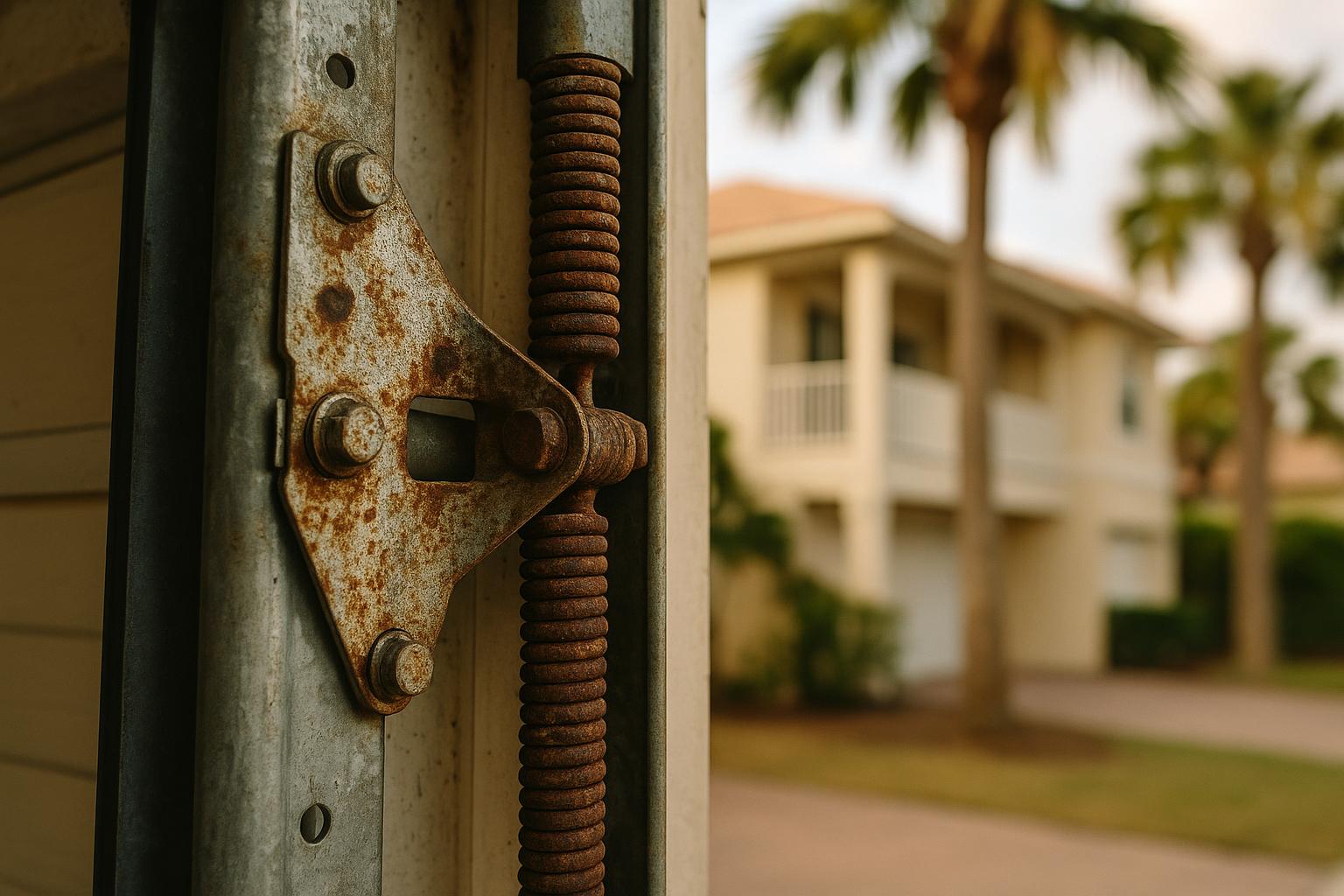
- Springs corrode and weaken. Torsion and extension springs are made of steel, which is highly susceptible to rust. Corroded springs lose their tension faster and are more likely to snap without warning, creating a serious safety hazard.
- Tracks and rollers deteriorate. Salt buildup inside the tracks creates friction, making your door work harder to open and close. Metal rollers can seize up entirely, putting extra strain on your opener.
- Hinges and brackets rust. These small but critical components hold your door together. When they corrode, the door can become misaligned or even dangerous to operate.
- Steel door panels pit and flake. If the paint or finish on your door panels is compromised — even by a tiny scratch — salt air will find its way in and cause rust to spread beneath the surface.
- Opener chains and hardware degrade. Chain-drive openers are especially vulnerable. A corroded chain can stretch, skip, or break, leaving your door stuck in place.
Warning Signs of Salt Air Damage
Corrosion doesn't always announce itself with obvious rust stains. Here are some early warning signs that salt air is taking a toll on your garage door system:
- Orange or reddish-brown discoloration on springs, tracks, or hinges
- A grinding or scraping noise when the door moves
- The door feels heavier than usual when you lift it manually
- Visible pitting or bubbling on metal door panels
- Your opener seems to struggle or strain during operation
- The door sticks or hesitates at certain points along the track
If you're noticing any of these issues, it's worth having a professional take a closer look before a minor problem turns into a major repair.
Protecting Your Garage Door from Coastal Corrosion
The good news is that salt air damage is largely preventable with the right approach. Here's what homeowners in Miramar Beach and surrounding communities like Destin, Santa Rosa Beach, and Sandestin can do to extend the life of their garage doors.
1. Schedule Regular Maintenance
A professional tune-up once or twice a year is the single best investment you can make in your garage door's longevity. During a maintenance visit, a technician will lubricate all moving parts with a corrosion-resistant lubricant, inspect springs and cables for early signs of wear, clean the tracks, and tighten any loose hardware. Think of it like an oil change for your car — a small cost now that prevents expensive breakdowns later.
2. Rinse Your Door Regularly
It sounds simple, but rinsing your garage door with fresh water every few weeks can make a significant difference. This washes away salt deposits before they have a chance to eat into the metal. Pay special attention to the bottom panels and any hardware you can safely reach. A garden hose is all you need.
3. Keep Moving Parts Lubricated
Between professional visits, apply a silicone-based or lithium-based lubricant to your springs, rollers, hinges, and tracks every three to four months. Avoid using WD-40 as a long-term lubricant — it's great for loosening stuck parts but doesn't provide lasting protection against corrosion. Look for products specifically designed for garage doors or marine environments.
4. Touch Up Paint and Finish
Inspect your door panels periodically for chips, scratches, or areas where the finish has worn away. Touch these up promptly with a rust-inhibiting primer and exterior paint. Even a small exposed area can become a starting point for widespread corrosion, especially during our humid summer months.
5. Consider Corrosion-Resistant Materials
If your current garage door is reaching the end of its life, consider replacing it with materials better suited to coastal living. Aluminum doors resist rust naturally and are a popular choice along the Gulf Coast. Fiberglass and vinyl options are also virtually immune to salt air damage. If you prefer the look of steel, choose a door with a high-quality, factory-applied finish and consider models specifically rated for coastal environments.
6. Upgrade to a Belt-Drive Opener
If you're still running a chain-drive garage door opener, switching to a belt-drive model eliminates one of the most corrosion-prone components in your system. Belt-drive openers use a reinforced rubber belt instead of a metal chain, so there's nothing for salt air to corrode. They're also significantly quieter — a nice bonus if you have living space above or near your garage.
Why Coastal Homes Need More Attention
Homeowners in inland areas might get away with ignoring their garage door for years. Along the Emerald Coast, that's a gamble that rarely pays off. We've seen garage doors in Miramar Beach and Freeport that needed full spring replacements after just a few years because the homeowner didn't realize how aggressively the salt air was working against them.
The humidity here compounds the problem. Salt doesn't just sit on surfaces — it absorbs moisture from the air, creating a corrosive film that works around the clock. During summer, when humidity regularly exceeds 80 percent, the rate of corrosion accelerates significantly.
When to Call a Professional
Some maintenance tasks are perfectly safe for homeowners to handle on their own. Rinsing your door, applying lubricant, and touching up paint are all straightforward. However, you should never attempt to adjust or replace garage door springs yourself. These components are under extreme tension and can cause serious injury if handled improperly.
If you notice significant rust on your springs, cables, or brackets — or if your door isn't operating smoothly despite your maintenance efforts — it's time to call in a professional. Catching corrosion-related problems early almost always means a simpler, less expensive repair.
Keep Your Garage Door Running Smoothly
Living in Miramar Beach means embracing everything that comes with coastal life — including taking a few extra steps to protect your home. Your garage door is one of the hardest-working parts of your house, and a little preventive care goes a long way toward keeping it safe, functional, and looking great.
If it's been a while since your last garage door tune-up, or if you're seeing signs of salt air damage, Miramar Beach Door & Opener is here to help. We understand the unique challenges that come with maintaining a garage door on the Gulf Coast, and we'll make sure yours is ready to handle whatever the salt air throws at it.