
Storms, Outages, and a Garage Door That Won't Budge
If you live in Miramar Beach, you already know that power outages are part of life — especially during hurricane season and summer storms rolling in off the Gulf. When the lights go out, one of the first things homeowners realize is that their automatic garage door opener doesn't work. If your car is inside the garage and you need to get to work, pick up the kids, or evacuate ahead of a storm, a non-functioning garage door can quickly become a serious problem.
The good news is that every modern garage door opener is designed with a manual release mechanism. Knowing how to use it before an emergency strikes can save you time, stress, and potentially money on an unnecessary service call. Let's walk through exactly what to do when your garage door won't open during a power outage, how to stay safe while doing it, and what to check once the electricity comes back on.
Step 1: Locate the Emergency Release Cord
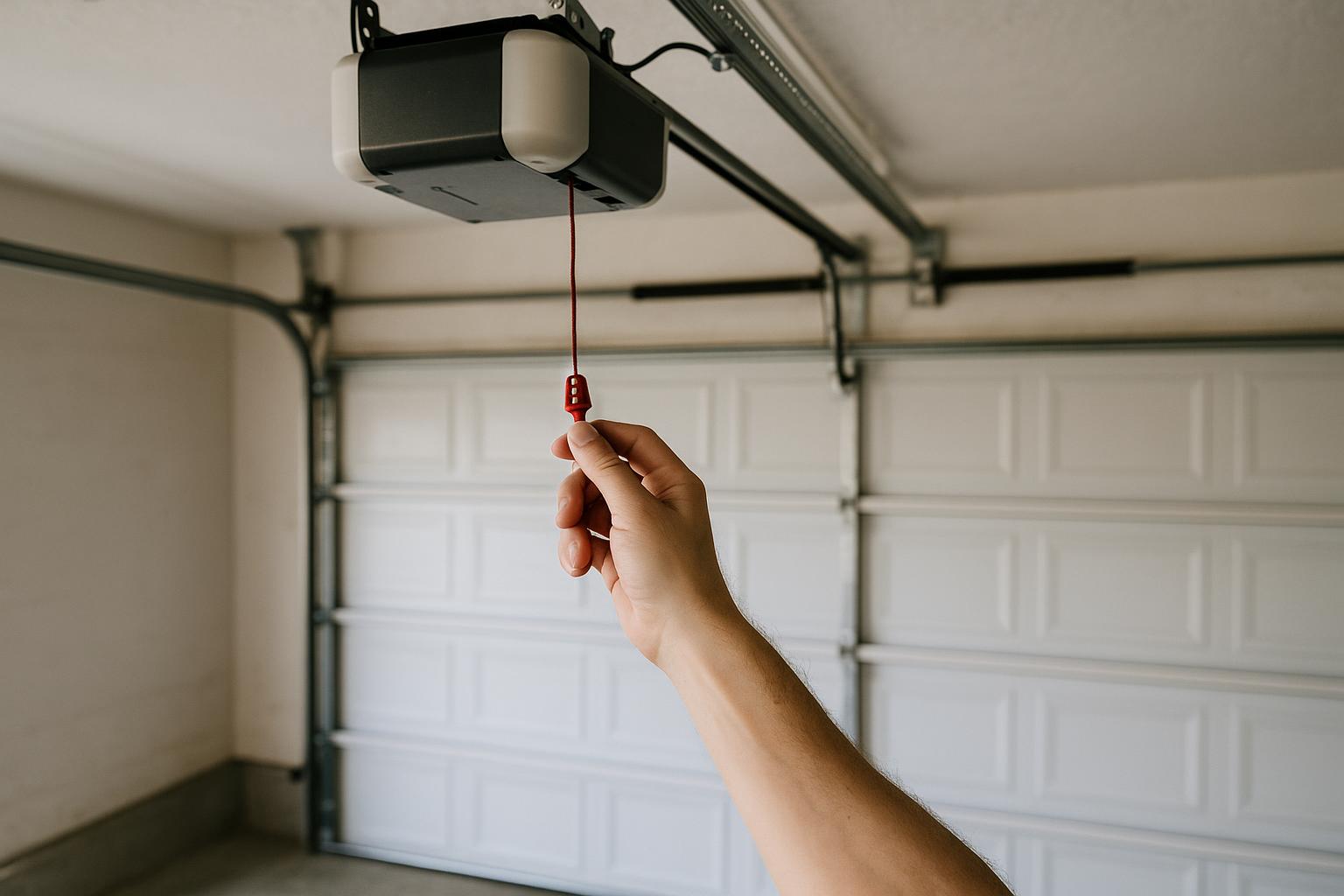
Look up at the track assembly that runs along your garage ceiling. You'll see a short rope or cord hanging down from the trolley — the piece that connects the opener's chain or belt to the door itself. This cord usually has a red handle at the end, making it easy to spot even in low light.
This is your emergency release cord, and it's the key to disconnecting the door from the automatic opener so you can operate it by hand.
A Quick Safety Note
Before you pull that cord, make sure the garage door is in the fully closed position. If the door is partially open and you disengage the trolley, the door could come crashing down — especially if a spring is weak or broken. If your door is stuck halfway and you're unsure whether the springs are functioning properly, it's safer to call a professional rather than risk injury.
Step 2: Pull the Emergency Release
With the door fully closed, pull the red handle straight down and toward the back of the garage. You should hear or feel a click as the trolley disconnects from the opener carriage. The door is now in manual mode.
From here, you can lift the garage door by hand. A properly balanced door with healthy springs should feel relatively light — typically around 10 to 15 pounds of lifting effort, even though the door itself may weigh 150 pounds or more. The springs do the heavy lifting.
- Grip the door at the bottom with both hands.
- Lift straight up in a smooth, steady motion.
- Guide the door all the way to the fully open position.
If the door feels extremely heavy, won't stay open on its own, or seems to drift back down, your springs may be worn out or broken. Don't force it. A door that won't stay open is a safety hazard, and the springs likely need replacement.
Step 3: Secure the Door While It's Open
Once the door is open and you've moved your car out, you'll need to decide whether to leave it open or close it. If you're leaving the house during a storm, you'll want the door closed and locked for security. Most garage doors have a manual lock — a slide bolt or latch built into the door's handle assembly on the inside.
If you need the door to stay open temporarily, make sure it's resting securely in the open position. Some homeowners use C-clamps or locking pliers on the track just below one of the bottom rollers to prevent the door from sliding down unexpectedly.
What to Do When Power Is Restored
Once the electricity comes back on, you'll need to re-engage the automatic opener. Here's how:
- Make sure the garage door is in the fully closed position.
- Pull the emergency release cord toward the opener motor (toward the front of the garage). Some models re-engage automatically when you press the wall button or remote.
- Press your wall-mounted garage door button or remote control. The opener should reconnect to the trolley and resume normal operation.
- Test the door through a full open-and-close cycle to make sure everything is working properly.
If the opener runs but the door doesn't move, the trolley may not have re-engaged. Try pulling the release cord again, then manually push the door until you hear the trolley click back into place. Then test with the remote.
When Manual Operation Reveals a Bigger Problem
Power outages have a way of exposing garage door issues that were easy to ignore when the opener was doing all the work. Pay attention to these warning signs when operating your door manually:
- The door is extremely heavy to lift: This usually means one or both springs are failing. Healthy torsion springs should counterbalance the door's weight, making it easy to lift by hand.
- The door won't stay open: Again, this points to a spring issue. A door that slides back down is dangerous and needs immediate attention.
- The door moves unevenly or gets stuck: Bent tracks, worn rollers, or debris in the track can cause the door to bind. Along the Emerald Coast, sand and salt buildup in the tracks is a common culprit.
- You hear popping or grinding: Worn-out rollers, loose hardware, or a cable that's come off the drum can all produce alarming sounds during manual operation.
If you notice any of these issues, it's worth scheduling a maintenance visit once the storm passes. Small problems caught early are far less expensive than emergency repairs after a complete failure.
Should You Invest in a Battery Backup?
If power outages are a regular inconvenience in your area — and for many homeowners in Miramar Beach and along the Emerald Coast, they are — a battery backup for your garage door opener is worth considering. Many newer openers from brands like LiftMaster and Chamberlain come with built-in battery backup systems that kick in automatically when the power goes out.
With a battery backup, your garage door opener continues to function normally during an outage. You can open and close the door with your remote or wall button just like any other day. Most backup batteries provide enough power for multiple open-and-close cycles, giving you reliable access until electricity is restored.
If your current opener doesn't have this feature, we can install a compatible backup unit or upgrade you to a newer opener that includes one. It's a relatively small investment that pays for itself the first time a storm knocks out your power and you still need to get your car out of the garage.
Be Prepared Before the Next Outage
The best time to familiarize yourself with your garage door's manual release is before you actually need it. Take five minutes on a calm day to locate the red cord, practice pulling it, and lift the door by hand. You'll know immediately whether your door is properly balanced and whether the springs are in good shape.
If anything feels off — the door is too heavy, it won't stay open, or the release mechanism is stuck — give us a call at Miramar Beach Door & Opener. We serve homeowners throughout Miramar Beach, Destin, Santa Rosa Beach, Sandestin, Freeport, and Niceville, and we're happy to inspect your system, tune it up, and make sure you're ready for whatever the next storm brings.