
A Frustrating Problem That's More Common Than You Think
You press the button on your garage door remote, watch the door begin its descent, and then — just before it reaches the floor — it suddenly reverses and goes right back up. If this scenario sounds familiar, you're not alone. This is one of the most common garage door complaints we hear from homeowners in Miramar Beach and across the Emerald Coast.
While it might seem like your garage door has a mind of its own, there's always a logical explanation. The good news is that some causes are simple fixes you can handle yourself. The not-so-good news is that others point to more serious mechanical or electrical issues that need professional attention. Let's walk through the most likely reasons your garage door won't stay closed and what you can do about each one.
1. Misaligned or Dirty Safety Sensors
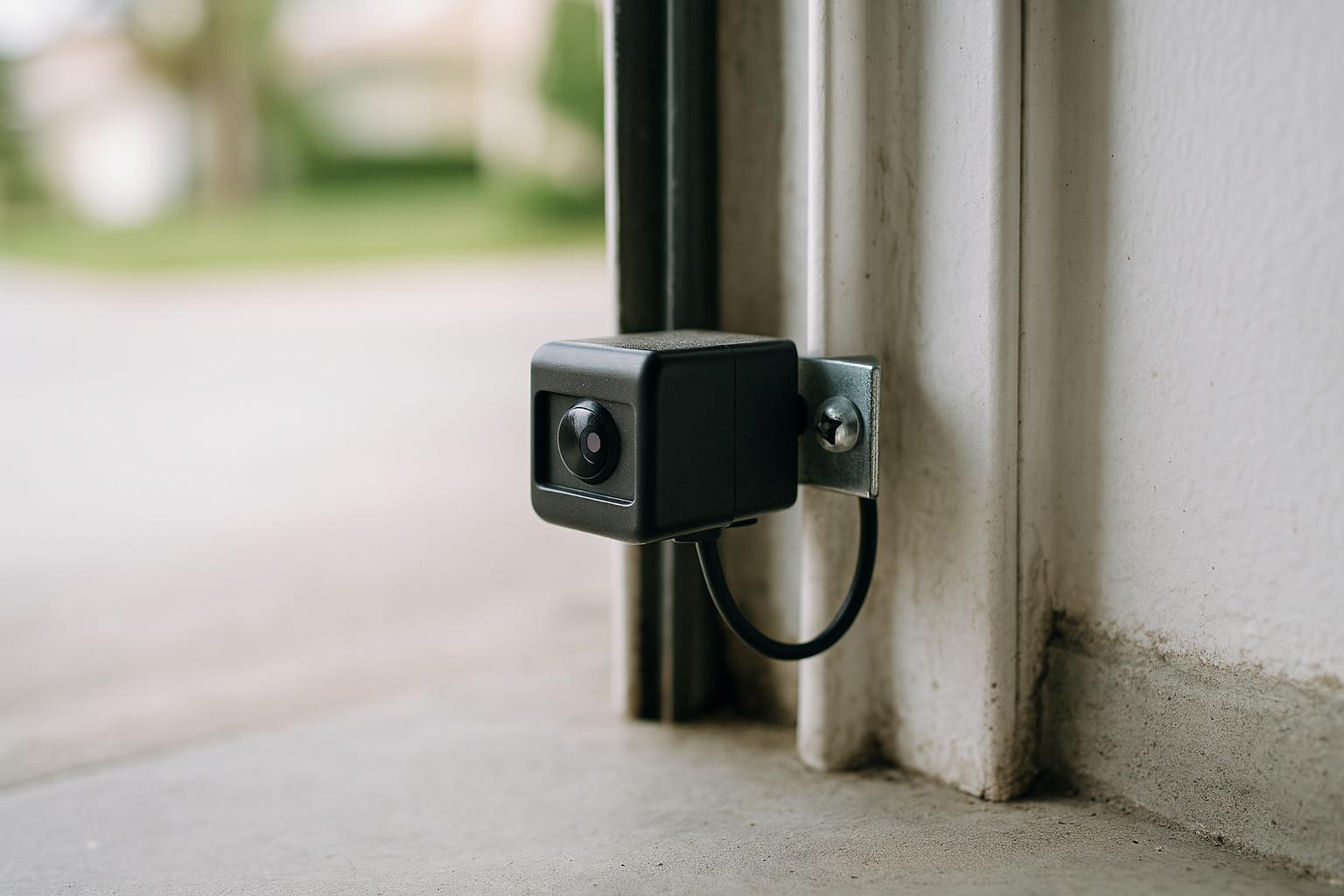
This is the number one reason garage doors reverse before closing completely. Every modern garage door opener manufactured after 1993 is equipped with photo-eye safety sensors — small devices mounted on either side of the door near the floor. These sensors send an invisible beam across the opening, and if anything breaks that beam, the door automatically reverses to prevent crushing a person, pet, or object.
Over time, these sensors can become misaligned from a bump, vibration, or even settling of your garage structure. They also collect dust, dirt, cobwebs, and — here in Miramar Beach — salt residue from the coastal air, which can block the beam.
What to Try
- Check that both sensors have a steady green or amber light (blinking usually means misalignment).
- Gently wipe the sensor lenses with a soft, dry cloth.
- Make sure nothing is obstructing the path between the two sensors — even a leaf or small debris on the garage floor can trigger a reversal.
- Carefully adjust the sensor brackets so both units point directly at each other.
2. Incorrect Close-Limit Settings
Your garage door opener uses limit settings to determine how far the door should travel before it's considered fully open or fully closed. If the close-limit setting is off — even by a small margin — the opener may interpret the door touching the ground as hitting an obstruction. When that happens, the safety mechanism kicks in and reverses the door.
This issue often appears after a new opener installation, a recent repair, or even seasonal temperature changes that cause your garage door tracks and hardware to expand or contract slightly. Our humid subtropical climate along the Florida Panhandle can amplify these shifts.
What to Try
- Consult your opener's manual for instructions on adjusting the down-limit switch or setting.
- Make small adjustments — usually a quarter turn at a time — and test the door after each change.
- If you're not comfortable making these adjustments, this is a quick fix for a trained technician.
3. Worn or Broken Garage Door Springs
Your garage door springs do the heavy lifting — literally. They counterbalance the weight of the door so the opener motor doesn't have to do all the work. When springs wear out, lose tension, or break, the door becomes significantly heavier. The opener struggles to control the descent, detects excessive resistance, and reverses as a safety precaution.
Spring issues are especially common in coastal areas like Miramar Beach, Destin, and Santa Rosa Beach, where salt air accelerates corrosion on metal components. If you notice your door seems sluggish, makes unusual noises, or you can see a visible gap in one of the torsion springs above the door, it's time to call a professional.
Important safety note: Garage door springs are under extreme tension and can cause serious injury if handled improperly. Spring replacement should always be performed by an experienced technician.
4. Problems with the Garage Door Track
The metal tracks on either side of your garage door guide it as it opens and closes. If a track is bent, dented, or has accumulated debris, the door can bind or stick during operation. The opener senses this resistance and reverses to avoid causing damage.
What to Try
- Visually inspect both tracks for obvious bends, dents, or gaps where the track meets the wall brackets.
- Clear away any debris, dirt, or small objects from inside the tracks.
- Check that the tracks are properly aligned and parallel — you can use a level to verify.
Minor debris removal is safe to do yourself, but bent tracks typically require professional tools and expertise to repair or replace without compromising the entire system.
5. Damaged or Frayed Cables
Lift cables work in tandem with your springs to raise and lower the door in a controlled manner. When a cable frays, loosens, or snaps, the door may descend unevenly, triggering the opener's safety reversal. You might also notice the door hanging crooked or hear a loud snapping sound.
Like springs, cables are under significant tension and should only be repaired or replaced by a qualified garage door technician.
6. Opener Motor or Logic Board Issues
If you've checked everything above and the problem persists, the issue may be internal to the opener itself. The logic board — essentially the brain of your garage door opener — can malfunction due to power surges, age, or electrical issues. Florida's frequent summer thunderstorms make power surges a real concern for homeowners in Miramar Beach and neighboring communities like Niceville and Freeport.
A surge protector for your garage door opener is an inexpensive investment that can save you from a costly logic board replacement down the road.
When to Call a Professional
Some of the troubleshooting steps above are perfectly safe for a handy homeowner. Cleaning sensors, clearing track debris, and checking for obstructions are all reasonable DIY tasks. However, you should call a professional when:
- You suspect broken or worn springs.
- Cables appear frayed or loose.
- The tracks are visibly bent or warped.
- Limit setting adjustments don't resolve the issue.
- The opener motor makes grinding noises or smells like it's burning.
- You're simply unsure what's causing the problem.
Attempting complex garage door repairs without the right tools and training can lead to injury or further damage to your system.
Keep Your Garage Door Running Smoothly
A garage door that reverses before closing is more than an inconvenience — it's a security risk for your home and a sign that something in the system needs attention. Whether it's a simple sensor cleaning or a more involved spring replacement, addressing the issue promptly prevents small problems from becoming expensive ones.
At Miramar Beach Door & Opener, we help homeowners across the Emerald Coast diagnose and fix garage door issues quickly and affordably. If your door won't stay closed and you've exhausted the easy fixes, give us a call. We'll get to the bottom of it and have your garage door working reliably again.